Saturday, May 05, 2007

Market Season

Winter is finally over. The flowers have bloomed and

I’ve started my yard work in earnest. My tomato plants that I started from seed aren’t doing as well as I’d like so I’ll probably give in and just buy some plants.

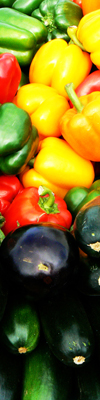
Spring also means that farmer’s markets are opening. I totally dig farmer’s markets. It’s a wonderful thing to be able to shake the very hands that planted and harvested your food. What’s in season is fresh and when it’s gone, it’s gone. It tends to make you appreciate things more when they aren’t always available (never mind that once you’ve had a ripe heirloom tomato, there’s no going back).

On Saturdays from 9:00a.m. until noon, we’ll be at the Howard County Farmer’s Market in Glenwood. Come out and get some fresh air, produce grown in your own area code, and some fresh-roasted coffee.

If you don’t live near us, you can find your own local market at localharvest.org.

Tuesday, April 24, 2007

Artifact Coffee

To me, there’s something fascinating about old buildings. I don’t know why, but I find cast iron and weathered brick very romantic. When I was a kid, I used to spend afternoons exploring an abandoned WWII army base on the edge of town. Sneaking into the vacant barracks, I tried to imagine how it must’ve been back when the base was in operation and soldiers trained before shipping out overseas.


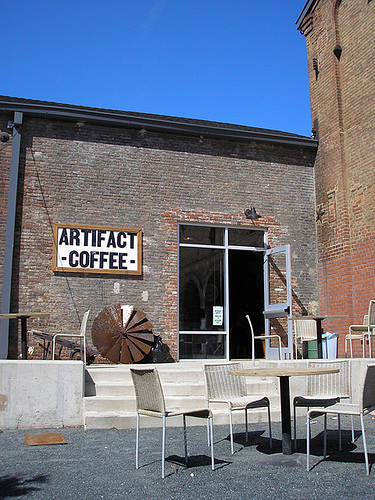
Artifact Coffee is located in Clipper Mill, an urban village built on the site of an abandoned mill that was founded in 1853 and manufactured sails for clipper ships. The wonderful thing about Clipper Mill is that instead of leveling the old buildings, the developers kept the historic facades intact and incorporated them into the design of the modern community.

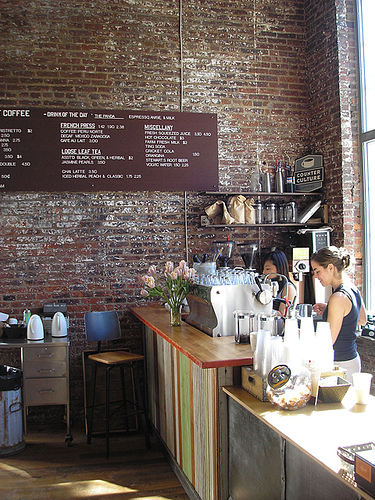
Inside the coffee shop, a state of the art Synesso Cyncra sits juxtaposed against the unvarnished wood counter. Weighing in at almost 175 pounds, the Cyncra is an electronically temperature-controlled, stainless steel work of art. As advanced as is it is though, it is still just a tool (albeit a very nice one) and anything less than a capable hand will produce poor results. Much to their credit, the baristas here have very capable hands.


Looking up at the sparse menu, I noticed that I only saw one size of each drink - and no frozen drinks! It’s good to see more owners bucking the “bigger-is-better” venti trend. Single origin french press coffee also figures prominently.


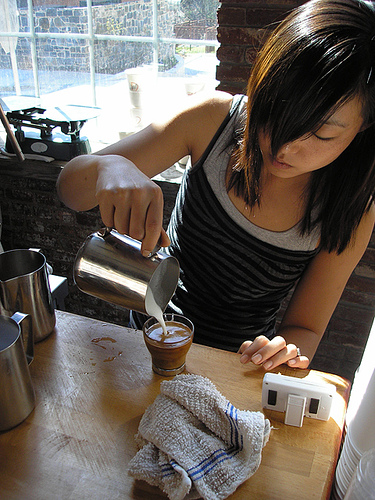
I ordered a macchiato and was pleased to see the barista heat up a properly-sized cup with water. Her hands moved confidently and smoothly through the routine undoubtedly polished by thousands of drinks before mine. A minute later, a lovely looking macchiato sat before me on the bar. My tongue wasn’t betrayed by the expectations that my eyes had created. The espresso had the color of mahogany and was buttery, complex, and balanced. It paired perfectly with the subtle sweetness of the microfoamed milk.

Great coffee, great service, and a beautiful location – what more can one ask for?

I really like this place; I just wish that it were closer to my house.


Artifact Coffee
2010 Clipper Park Road
Baltimore, MD
410-464-8000

Wednesday, April 04, 2007

Ventana de Café


Photo courtesy of Julie Hicks

Depending upon one’s perspective, the word "Miami" conjures up different images. Many people think of South Beach and its Art Deco architecture and the “beautiful people.” For others, cigars are the main attraction.

My thing though, is the coffee window. For the uninitiated, a coffee window is an espresso bar open to the sidewalk. Most Cuban restaurants have them, and they are a local institution. Owing at least in part to the year-round pleasant weather and the fact that Cubans love a good, spirited conversation, at almost any hour you can find a few people socializing outside while enjoying a cafecito.

Coffee in Miami is a little (ok, a lot) different than what you may be used to. First of all, there is no brewed coffee. All of it comes from the espresso machine, and it isn’t served up in 20 oz. portions either. The basic drinks are the cafecito, colada, cortadito, and café con leche.

Cafecito – espresso with lots of sugar added. Cuban coffee tends to be quite overextracted and the sugar helps offset the bitterness.

Colada – a large portion, perhaps 4 oz., served in a small styrofoam cup and accompanied by several small plastic cups. The cups are for you to share your coffee with your friends or workmates.

Cortadito – a cafecito with anywhere from a tablespoon of milk to half milk/half coffee.

Café con leche – the Cuban equivalent of a latte; usually drunk in the morning.

Although I don’t get into Miami as often as I like, I pass through Miami International a few times a year and get to indulge my cafecito jones at La Carreta, a Cuban restaurant located at the entrance to concourse D. There’s no better way to shake out the cobwebs of an 8-hour overnighter than with a cafecito and a couple of ham croquettes!

Friday, February 09, 2007

Tostada y Café


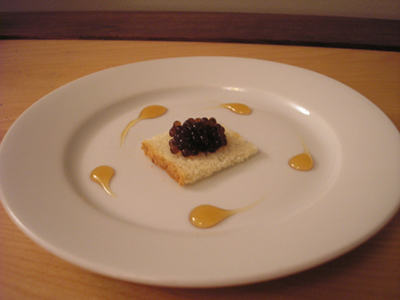
I've been experimenting with a technique that gels liquids instantaneously and at room temperature to create espresso "caviar."  The espresso is encapsulated inside itself and it bursts in the mouth, much like real caviar.

This is my interpretation of the traditional Spanish breakfast of coffee and toast.

Saturday, January 27, 2007

A Necessary Inconvenience

I like public radio. I like it a lot. But there’s one thing that I can’t stand about public radio: fund raising week. I know, without advertising, they don’t have much choice except to open up the phone lines and prod us into feeling guilty for listening without paying. The management at the radio station probably hates fund raising week as much as the public does, but it’s the nature of the game.

The radio station also fills up with volunteers to man the phones. To help make everyone’s week a little more pleasant, Southern Skies is donating coffee to WAMU, the NPR affiliate in Washington, DC. It might not make the fund drive pass any faster for me, but it might for them.

Sunday, December 31, 2006

Spain

We made a trip earlier this year to Spain.  And while Spain isn’t exactly famous for coffee, I tried to visit as many coffee shops as I could.

Coffee in Spain means one thing: espresso.  A straight shot is known simply as “café solo.”  If you want them to add a little milk, you should ask for a “cortado.”  However, even with the addition of milk, almost everything that I tried was extremely bitter and overextracted.  Maybe it's because coffee in Spain is roasted dark traditionally, even darker than a French roast.  Another method of roasting is "torrefación."  In torrefación, sugar is added during the roast cycle, which caramelizes and coats the beans with a shiny glaze.  Originally, the sugar was added in order to lengthen the shelf life of the coffee.  Coffee drinkers became accustomed to the smoky flavor and now, it is done for the taste.


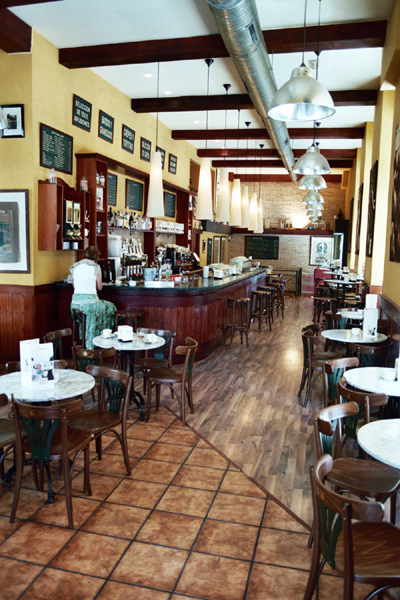
In Valladolid, we visited "Plantaciones del Origen," a coffee shop in the old city center.  A contemporary shop, they specialize in single-origin coffees, and will make a shot from from any of the coffees that they have available.  They also sell teas that they prepare in press pots.  Not willing to risk another espresso, I requested that my coffee be prepared in a press pot, to no avail.  Faced with only one option, I took the risk and was rewarded with a decent cup.  It wasn't great, but it was passable.  At least the shop was nice, with rustic wood floors, brick walls and a beautiful mahogany bar.


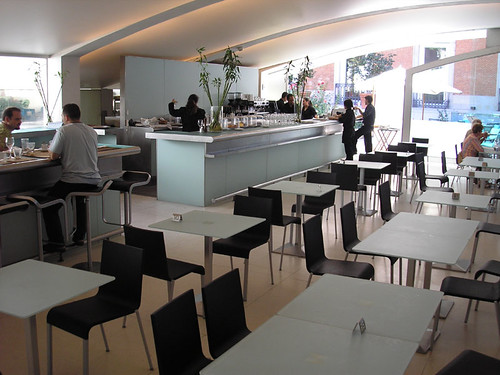
Another coffee shop we visited was in the Thyssen-Bornemisza Museum in Madrid.  All stainless steel and frosted glass, it's a stunning space.  The ceiling is made of a backlit fabric and combined with the natural light from the large windows, the resulting ambience is very pleasant.


Friday, October 27, 2006

Brooklyn Coffee Tour

For my birthday, I went up to NYC with some friends. I wanted to stop in at Gimme! Coffee in Brooklyn to say hi to Chris Owens, so I called him to let him know that we would be in town. I let him know that we were going to visit some of the other shops in the borough and much to my surprise, he generously offered to give us the VIP treatment and be our guide (on his day off!).


The next day, we met at Gimme! and jump-started the morning with an exquisite espresso pulled from their new GB5. Smooth and buttery, with loads of body, it is one of my favorite espresso blends. Newly energized and ready to tackle the Brooklyn traffic, we set off for our first stop – Café Grumpy.


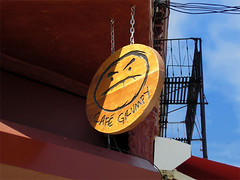
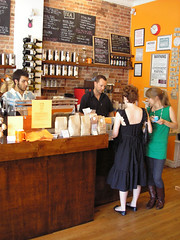
Café Grumpy is located in Greenpoint, Brooklyn, in an industrial-looking area. Without our expert navigators, Chris and his girlfriend M'lissa, we would probably never have found it. We were introduced to the owners, husband and wife Chris Timbrell and Caroline Bell, who showed us around their pride and joy. And it is a very nice shop with exposed brick walls, antique wood floors, and local art. Of course, the true measure of a shop (in my opinion) is the coffee, and in that department, they don’t disappoint. They have a Synesso Cyncra, and the shot that I had was smooth and sweet. It was the first time that I’d tried Counter Culture’s Espresso Aficionado and I preferred it over the Toscano blend, though it’s no slouch by any means. Chris showed us some plans that he had for a shop over in Manhattan, in Chelsea. If it’s anything like his current shop, it’ll be a success (and when it comes to espresso, Manhattan needs all the help it can get!) Next stop… Gorilla Coffee.


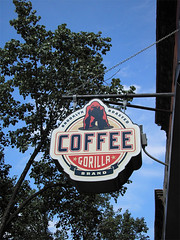
As we drove up 5th Avenue, I could see the throng of people waiting to get inside. We assumed our place in line and waited as it slowly snaked its way through the door and into the shop, affording us the opportunity to view the display of Gorillawear t-shirts and mugs. Front and center on the counter sat a retro-style Faema E61 Jubilee. Decked out in chrome, brass, and red neon, it’s a stunning piece of gear.


This shop really seems to be at the heart of the neighborhood, a true “third place.” If only all shops could bring an area together like this.